Felix Patterson · 1 October 2026
AI Customization Reshapes Environmental Education Across Poland's Remote Classrooms
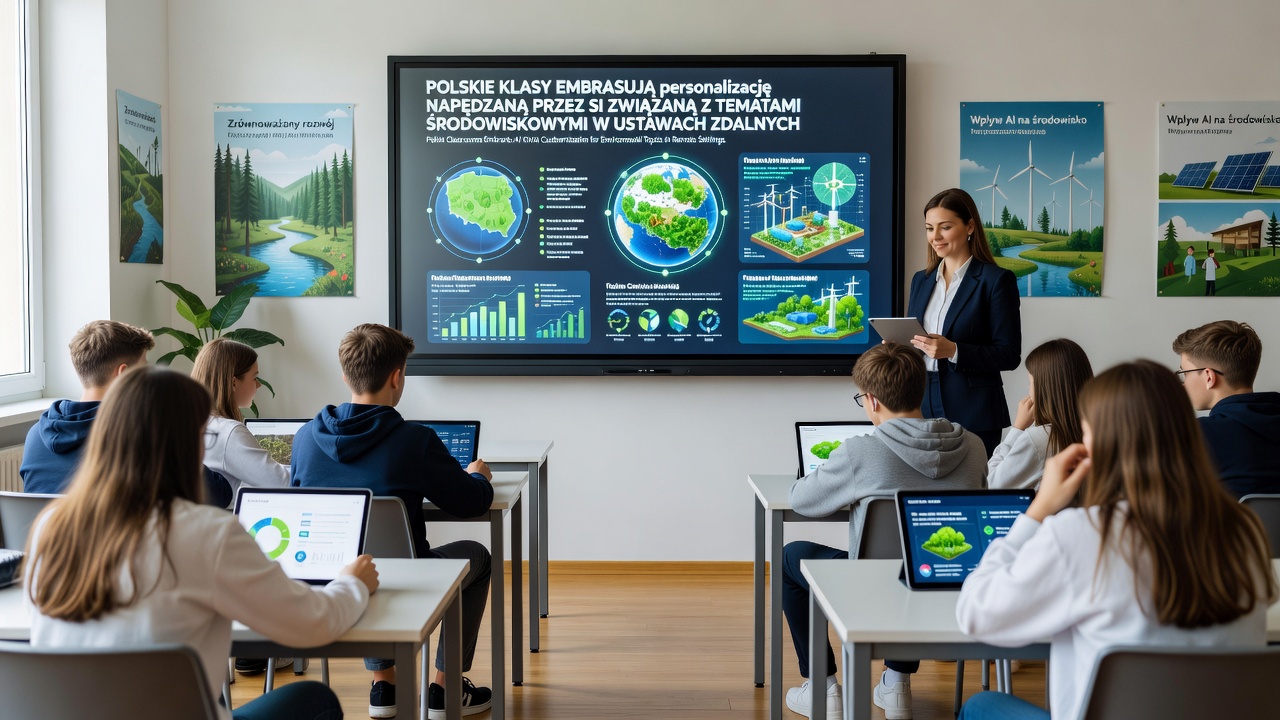
Polish schools in rural and remote regions have expanded their use of AI systems that adapt environmental science content to individual student needs, with several programs reporting measurable shifts in engagement metrics by October 2026. These platforms analyze performance data in real time and adjust lesson difficulty, pacing, and topic focus while maintaining alignment with national curriculum standards for subjects such as climate systems, biodiversity, and sustainable resource management.
Platform Mechanics and Regional Rollouts
Systems deployed across districts in Podlaskie and Lubelskie voivodeships process student responses through adaptive algorithms that reorder modules and insert supplementary explanations when knowledge gaps appear, while teachers receive aggregated dashboards that highlight class-wide trends without exposing individual identities. Data collected during the 2025-2026 academic year shows average completion rates for core environmental modules rising from 68 percent to 84 percent in participating remote sites after implementation, according to internal evaluations shared by regional education offices.
Schools connect these tools through existing broadband infrastructure that has received targeted upgrades under EU cohesion funding, allowing simultaneous access for students working from home or community centers during periods of weather-related school closures. One district reported that 72 percent of participating learners completed at least one customized environmental project outside scheduled class hours, a figure tracked through platform logs rather than self-reported surveys.
Content Focus Areas and Data Patterns
Environmental topics selected for customization include local watershed analysis, renewable energy comparisons, and habitat mapping exercises that draw on Polish-specific datasets from the Chief Inspectorate of Environmental Protection. Algorithms prioritize examples tied to regional geography, such as Baltic Sea pollution indicators for northern schools or Carpathian forest management for southern ones, while preserving core learning objectives across all locations.
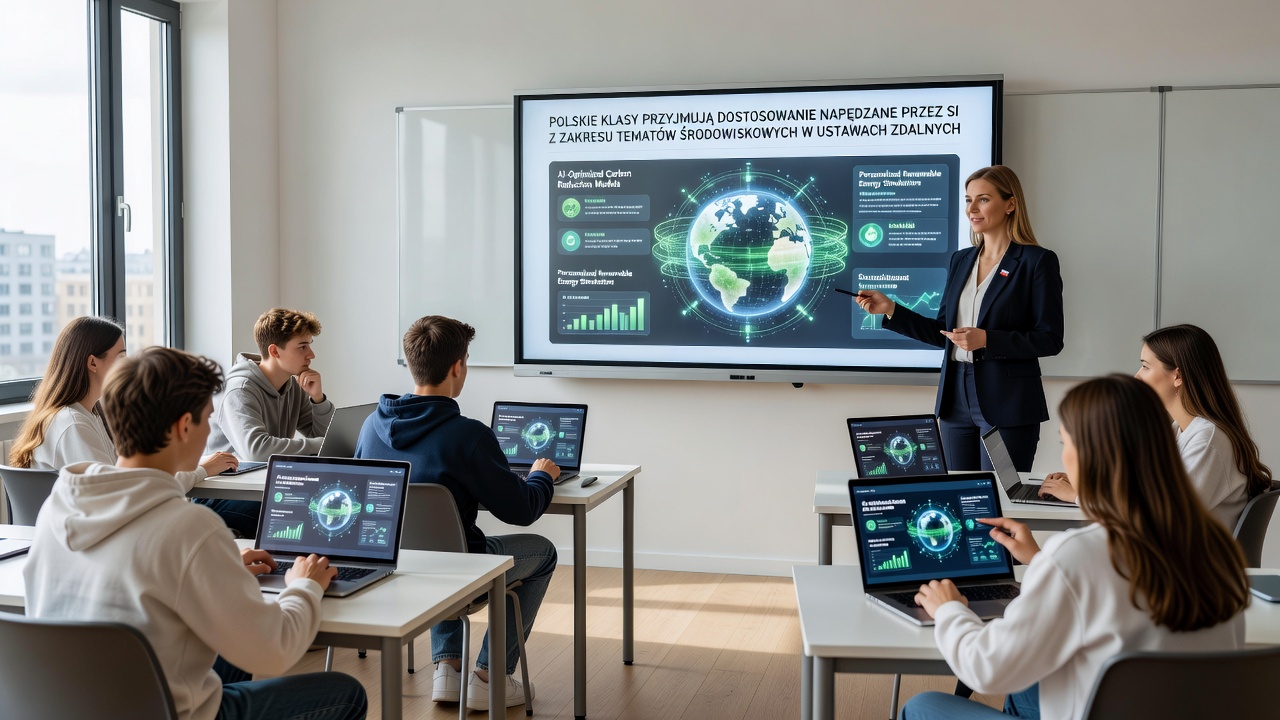
Researchers at Warsaw University of Technology documented that classes using the customization features recorded a 19 percent increase in correct answers on standardized environmental assessments compared with control groups that followed static lesson sequences. The study tracked 1,240 students across 18 remote schools and noted that the largest gains occurred among learners who initially scored in the lower quartile, a pattern attributed to the platforms' ability to insert targeted remediation sequences before advancing to new material.
Teacher Roles and Infrastructure Requirements
Teachers retain responsibility for setting overall unit goals and interpreting dashboard outputs during weekly planning meetings, yet the AI handles micro-adjustments such as rephrasing explanations or suggesting alternative data visualizations when a student stalls on a particular concept. Professional development sessions organized by provincial education centers in September and October 2026 trained over 400 educators on interpreting these analytics and integrating them with offline field activities like water quality sampling.
Connectivity remains a limiting factor in some areas, prompting several municipalities to distribute offline-capable versions of the software that sync progress data once devices regain signal. Ministry statistics indicate that 63 percent of remote schools now meet minimum bandwidth thresholds for full platform functionality, up from 41 percent two years earlier.
External Benchmarks and Comparative Studies
Comparative reports from the OECD education indicators program place Poland's remote classroom technology adoption rate within the middle tier of member countries, behind Estonia and ahead of several southern European states. Separate analysis by the European Environment Agency links such digital tools to broader goals of improving environmental literacy, noting that customized pathways can increase exposure to locally relevant case studies without expanding total instructional time.
Additional data from the Polish Ministry of Education and Science tracking portal shows that schools combining AI customization with periodic in-person workshops achieved the highest retention rates for complex topics such as carbon cycle modeling, with 91 percent of students completing follow-up assignments compared with 77 percent in purely remote cohorts.
Conclusion
By October 2026 the pattern of AI-supported customization for environmental topics had moved from pilot status to wider adoption in Poland's remote education settings, supported by infrastructure investments and documented performance shifts. Ongoing monitoring through regional dashboards and national assessment cycles continues to supply figures that inform further refinements to both algorithms and teacher training protocols.